
Reducing Theatre Downtime Through Smarter Infrastructure
How rapid deployment and modular approaches can minimise disruption and protect hospital revenue streams during upgrades
Healthcare facilities are under increasing pressure to upgrade critical clinical environments while minimising disruption to services, staff and patients. Nowhere is this more important than in operating theatres, where downtime can have significant operational, clinical and financial impacts.
Operating rooms are among the most complex and high-value environments within a hospital. Any refurbishment or infrastructure upgrade must balance infection prevention, clinical workflow, engineering performance, staff experience, project timelines and business continuity. For hospitals with high theatre utilisation, even short periods of downtime can affect surgical lists, patient access, clinician availability and revenue generation.
Smarter infrastructure solutions, including rapid deployment systems, modular design and integrated clinical technology, are helping healthcare facilities reduce disruption while improving the quality and capability of critical care environments.
IHEA members are invited to join the team at Wilhelm for an immersive tour of their Education Centre, showcasing technologies shaping the future of operating theatres and critical care environments.
The session will provide attendees with a practical look at how healthcare infrastructure, digital integration, infection prevention and smart clinical environments are evolving to improve workflow efficiency, safety and patient outcomes.
The tour will include live demonstrations, discussion with industry specialists, and exposure to technologies currently being deployed in Australian healthcare facilities.
Case Study: National Capital Private Hospital
A key example of smarter infrastructure in practice is Wilhelm’s work with National Capital Private Hospital, part of the Healthscope Group.

Located in Garran, ACT, National Capital Private Hospital is co-located with Canberra Hospital and provides a broad range of acute and medical healthcare services, including orthopaedics, cardiology, cardiothoracic surgery, general surgery, neurosurgery, plastic surgery, vascular surgery, urology and geriatric medicine.
As part of its ongoing commitment to delivering high standards of patient care, the hospital undertook a program to renovate four operating rooms. Given the high utilisation of these spaces, the hospital needed to complete the works within a very tight timeframe, while keeping disruption to the live hospital environment to an absolute minimum.
The first two operating rooms were scheduled for renovation over the 2021/2022 Christmas period, with a further two operating rooms scheduled for the following Christmas break. While this period represented a quieter time for scheduled surgery, the project still required careful planning, rapid delivery and strong coordination between all parties.
The core challenge was to complete the required operating room renovation and HVAC installation works within an extremely compressed program. Any delays had the potential to extend theatre downtime, disrupt clinical activity and affect the hospital’s ability to maintain surgical services.
The Challenge: Upgrading Critical Infrastructure in a Live Hospital
Operating theatre refurbishments are inherently complex. Works need to consider air quality, infection prevention, structural coordination, lighting, clinical equipment, surgical workflow, services integration and future maintenance access.
In a live hospital environment, these challenges are amplified. Project teams must manage noise, dust, infection control, contractor access, clinical adjacencies, patient safety and the continuity of hospital operations.
For National Capital Private Hospital, the challenge was clear: complete the works within the available shutdown window and return the operating rooms to service as quickly as possible.
This required an approach that could reduce construction complexity, improve coordination and shorten installation timeframes.
The Solution: Modular Clean Room Technology
National Capital Private Hospital selected Wilhelm’s AirFRAME clean room technology as part of the operating room upgrade.
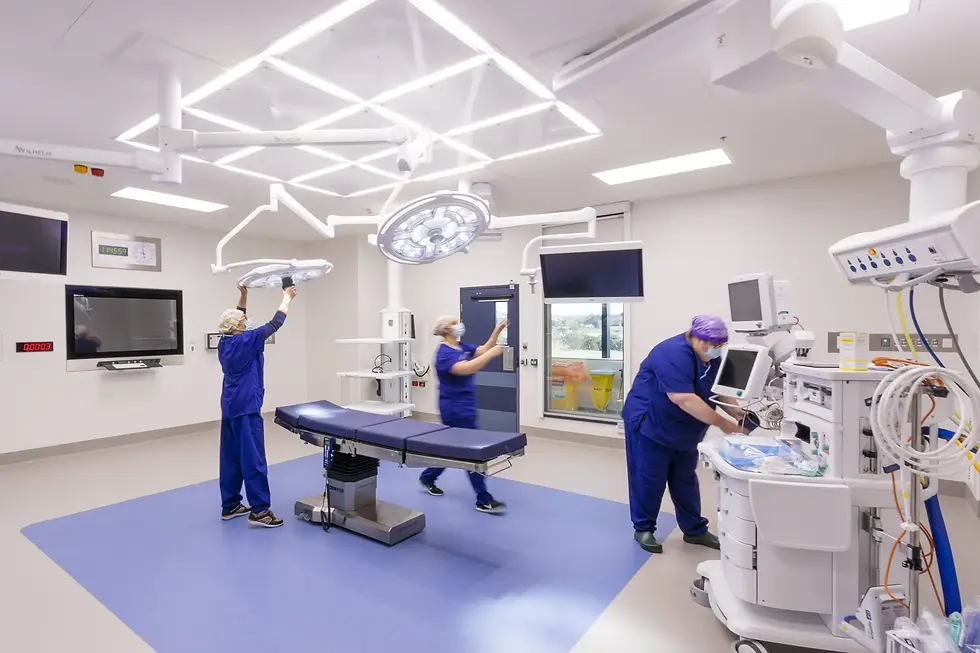
AirFRAME is a fully integrated, modular, prefabricated solution designed specifically for operating room ceilings. It brings together structural elements, air diffusion, pendants and lighting into a single coordinated system.
This modular approach offers several advantages over conventional construction methods. Rather than coordinating multiple separate systems on site, key elements can be pre-planned, integrated and delivered as part of a single solution.
For hospital projects operating under tight time constraints, this can significantly reduce installation time, coordination risk and disruption to clinical operations.
In the National Capital Private Hospital project, Wilhelm’s AirFRAME system was installed in each operating room in under two days, including structural works. This contributed to a four-week reduction in operating room downtime compared with traditional construction approaches.
Why Modular Delivery Matters

The case study demonstrates the value of modular infrastructure in complex healthcare environments.
By integrating structural support, air delivery, lighting and equipment mounting into one coordinated system, the project team was able to reduce the complexity that often occurs above operating room ceilings.
The benefits included:
Reduced installation time
Improved coordination between mechanical, structural and lighting services
Repeatable room design
Simplified duct connections
Improved certainty around equipment placement
Reduced on-site construction risk
Faster return to clinical use
The use of 3D modelling also supported the project team to plan in advance, work around duct penetrations that could not be moved, and ensure equipment mounts were positioned where clinicians needed them.
This level of pre-planning is particularly important in theatre environments, where even small design or coordination issues can have a significant impact on workflow, usability and project delivery.
Protecting Revenue and Clinical Continuity
Operating theatres are critical clinical and revenue-generating assets. When theatres are offline, hospitals may face cancelled or delayed procedures, reduced surgical capacity and pressure on both patients and clinicians.
In the National Capital Private Hospital project, the use of a modular, rapid-installation solution helped support faster return to operating room revenue generation compared with traditional construction methods.
This is an important consideration for healthcare infrastructure teams. While capital cost is always a factor, the true cost of an upgrade must also consider downtime, lost activity, disruption to clinical services and the impact on staff and patient experience.
Smarter infrastructure planning can help hospitals deliver upgrades while better protecting operational continuity.
Supporting Infection Prevention and Clinical Experience
The AirFRAME system was also selected for its clean room technology and infection prevention benefits.
Operating rooms require carefully controlled air movement to reduce the risk of airborne contaminants reaching the patient. By integrating air diffusion within a coordinated ceiling system, the technology supports improved environmental performance within the operating theatre.
The case study also highlights the importance of clinician experience. A well-designed operating room must support the people working within it every day. Lighting, equipment positioning, airflow, visibility, access and ease of use all contribute to a safer and more efficient clinical environment.
Feedback from the project noted that clinicians appreciated the newly renovated operating theatres, including the improved lighting and working environment.
The Digital Operating Room: Integrated Clinical Technology in Practice
The Wilhelm site tour will also feature the Caresyntax Digital OR Platform, providing attendees with insight into how vendor-neutral digital integration platforms are transforming the operating theatre environment.
Attendees will explore how digital operating room platforms can support:
Real-time surgical video management
Integrated imaging and device connectivity
Telesurgery, video conferencing and streaming applications
Data capture and future-ready surgical intelligence capabilities
Simple, easy-to-use interfaces designed to reduce friction in high-pressure clinical environments
Discussion will also include the role of cloud-connected surgical ecosystems and how hospitals are preparing for AI-enabled perioperative workflows.
As operating rooms become more digitally connected, infrastructure planning must increasingly consider data, interoperability, cybersecurity, usability and future technology pathways.

Emerging Technologies in Infection Prevention and Environmental Safety
The session will also feature Visium Far UVC Technology, with a focus on continuous environmental disinfection and the future of infection prevention in occupied clinical spaces.
Topics will include:
The science behind Far UVC technology
How continuous environmental disinfection enhances traditional terminal cleaning
Emerging applications within operating theatres and critical care environments
Designing healthcare spaces that actively support infection prevention strategies
The growing focus on healthier clinical environments for both patients and staff
Attendees will also learn how Far UVC technologies can integrate into modern healthcare infrastructure design, and the important role engineers can play in supporting safer clinical environments.
Broader Themes for Healthcare Infrastructure Delivery
The visit will touch on several broader trends influencing healthcare infrastructure delivery, including:
Modular and rapid operating room upgrades
Reducing theatre downtime during refurbishments
Smarter planning for live hospital environments
Clinician experience and workplace design
Infection prevention through infrastructure design
Digital integration and future-ready operating rooms
Sustainability and lifecycle considerations in healthcare technology
Protecting hospital revenue streams during critical upgrades
These themes are increasingly relevant as hospitals look to modernise ageing infrastructure, support new models of care and adopt emerging clinical technologies, all while maintaining safe and continuous operations.
A Practical Session for Healthcare Engineers and Infrastructure Professionals

This event will be of particular interest to healthcare engineers, facility managers, project teams, clinical infrastructure planners, infection prevention specialists and those involved in the design, upgrade and operation of operating theatres and critical care environments.
By combining practical demonstrations with real-world case study insights, the session will provide valuable insight into how smarter infrastructure can support safer, more efficient and more resilient healthcare environments.
The National Capital Private Hospital case study demonstrates that with the right planning, technology and delivery model, hospitals can undertake complex operating theatre upgrades while significantly reducing downtime and maintaining focus on patient care.
IHEA looks forward to welcoming members to this practical and engaging site tour.


Comments